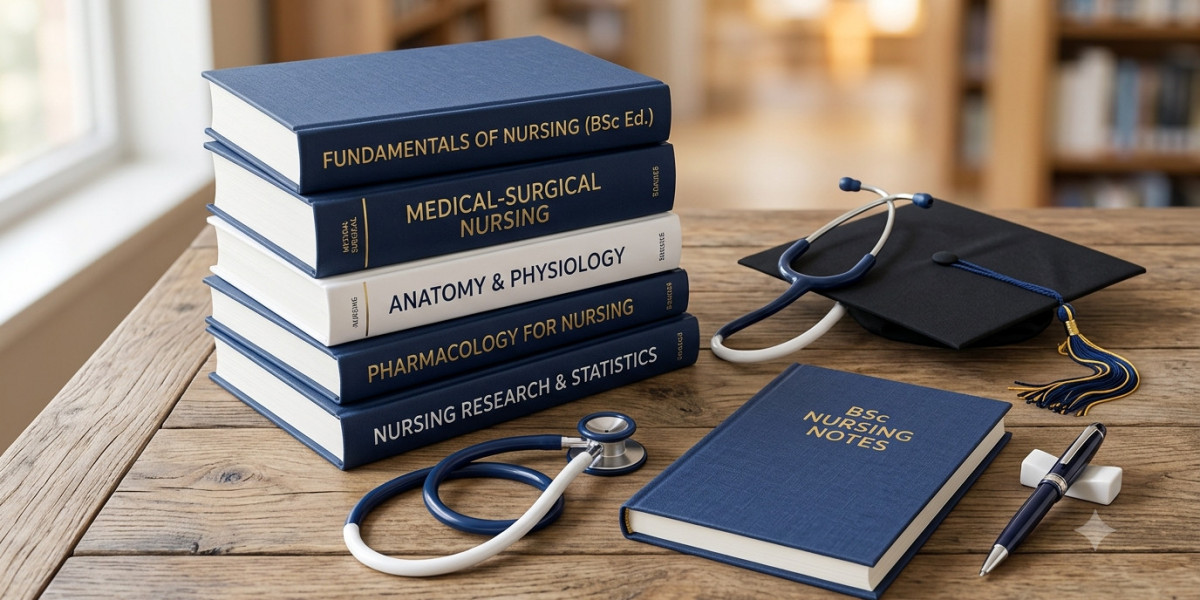

BSc Nursing Books: A Complete Guide for Nursing Students
Bachelor of Science in Nursing, commonly known as BSc Nursing, is a four-year undergraduate program that equips students with in-depth knowledge of medical science along with practical clinical skills. As one of the most respected career paths in healthcare, BSc Nursing demands strong academic preparation, and that begins with choosing the right BSc Nursing books.
With such a vast and detailed syllabus spread across four years, students often struggle to identify which books will genuinely help them understand concepts clearly and perform well in both theory and practical examinations. This guide breaks down everything you need to know about selecting the best nursing books for your academic journey.
Why Choosing the Right Books Matters
BSc Nursing is not just about memorizing facts; it requires a deep understanding of human anatomy, disease mechanisms, patient care techniques, and healthcare ethics. The right books can make this learning process smoother by offering:
- Simplified explanations of complex medical concepts
- Well-labeled diagrams and clinical illustrations
- Step-by-step procedures for nursing skills and techniques
- Practice questions based on university exam patterns
- Updated content reflecting current healthcare guidelines and nursing council standards
Since nursing directly impacts patient care, textbooks also play a role in shaping clinical judgment and decision-making abilities in real-world situations.
Year-Wise Book Recommendations
First Year
The first year lays the academic foundation with subjects like Anatomy, Physiology, Biochemistry, Nutrition, Psychology, and Fundamentals of Nursing. Books at this stage should focus on building strong basics, using clear diagrams and simple language, especially for subjects like anatomy where visual learning is essential.
Second Year
The second year introduces more clinical subjects such as Medical-Surgical Nursing, Microbiology, Pharmacology, and Pathology. Students need books that connect theoretical disease processes with nursing interventions, along with drug classifications and dosage calculations for pharmacology.
Third Year
This year covers Child Health Nursing, Mental Health Nursing, and Midwifery. Books should include case studies, growth and development charts, and psychiatric assessment tools, as these subjects require both conceptual clarity and practical application.
Fourth Year
The final year focuses on Community Health Nursing, Management of Nursing Services, and Research in Nursing. At this stage, books should emphasize public health strategies, leadership principles, and research methodology, preparing students for both exams and future professional responsibilities.
Tips for Selecting the Best BSc Nursing Books
- Choose the Latest Edition: Medical protocols and nursing guidelines evolve frequently. Always opt for updated editions to avoid outdated information.
- Prioritize Visual Learning Aids: Diagrams, flowcharts, and clinical images significantly improve understanding, especially in subjects like anatomy and pathology.
- Check Syllabus Alignment: Ensure the book matches the curriculum prescribed by your university or nursing council, as content can vary between regions.
- Look for Exam-Oriented Content: Books that include previous year questions, MCQs, and revision summaries are extremely valuable during exam preparation.
- Balance Depth with Simplicity: Avoid books that are either too basic or overly technical. The ideal book explains concepts thoroughly while remaining easy to understand.
Combining Books with Clinical Practice
While textbooks provide essential theoretical knowledge, BSc Nursing is fundamentally a practice-based profession. Students should actively integrate their reading with hospital postings, skill labs, and simulation training. Understanding a nursing procedure on paper is different from performing it confidently on a patient, and combining both strengthens overall competency.
Many nursing students also find it helpful to maintain concise notes summarizing key points from their textbooks. This habit not only reinforces memory but also becomes a valuable resource during final revisions before exams.
Conclusion
BSc Nursing books serve as the foundation for a student's academic and professional growth, covering everything from basic human biology to advanced patient care management. Selecting updated, well-illustrated, and syllabus-aligned books across all four years can significantly enhance learning outcomes. When paired with consistent clinical practice and disciplined revision, the right study materials can help students build the knowledge and confidence needed to excel as skilled, compassionate nursing professionals.
Choosing quality resources today lays the groundwork for a successful and impactful nursing career tomorrow