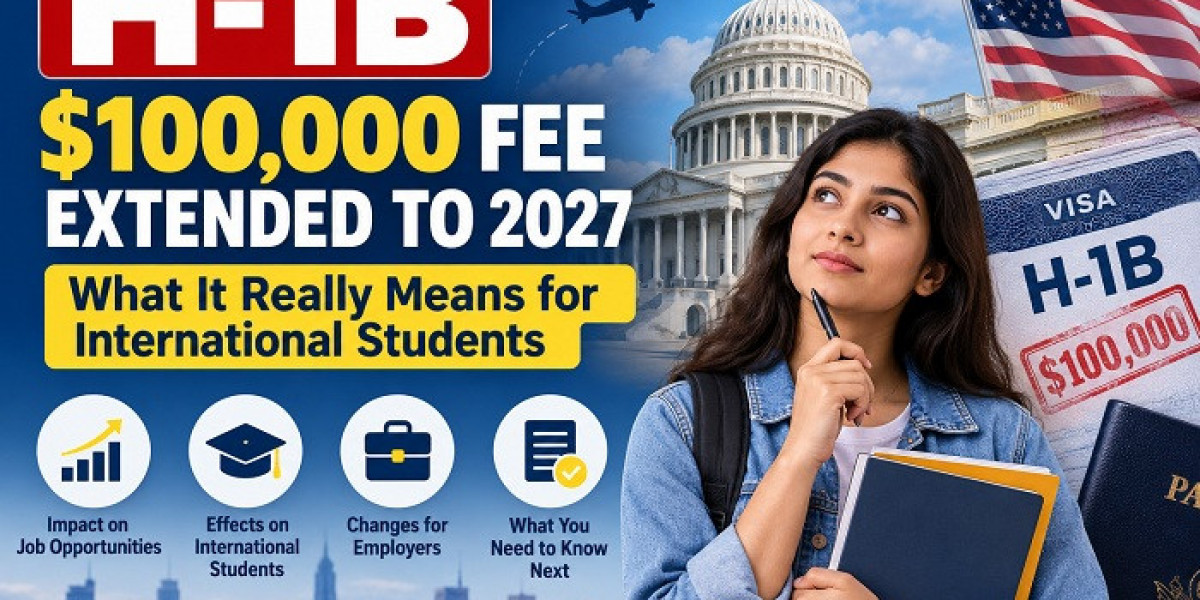

For many international students, studying in the United States has always been about more than earning a degree. The goal often includes gaining professional experience and building a career after graduation. But the path from an F-1 student visa to long-term employment is becoming more complicated as H-1B rules continue to change.
The research paper on the H-1B $100,000 fee shows that students need to look beyond the headline figure. The fee is only one part of a wider policy shift involving H-1B selection, employer decisions, travel and immigration status.
For students preparing for the OPT to H-1B transition, understanding these changes early can make career planning more practical.
The H-1B Fee Does Not Affect Every Student
The first point students need to understand is that the $100,000 fee does not simply apply to every international student seeking H-1B status.
The research explains that the policy was designed around certain new H-1B petitions involving workers outside the United States. Students already living in America may follow a different route when their employer files a qualifying change-of-status petition.
This distinction is significant for students completing degrees in the United States. Someone studying in California, working through OPT and moving directly into an H-1B change of status is in a different position from someone who leaves the country and later seeks H-1B processing from abroad.
Students should therefore avoid treating every H-1B case as identical. Their current immigration status, location and filing route can change the situation.
The research paper also notes that the $100,000 requirement remains tied to ongoing court proceedings. That means students need to distinguish between a policy announcement and what is actually being enforced at a particular time.
Wage Levels Could Matter More Than Students Expect
The H-1B lottery itself is another major consideration for international graduates.
According to the research paper, DHS finalized a wage-weighted selection system in 2025. Under this approach, H-1B registrations connected with higher wage levels receive greater selection weight.
That creates an important challenge for recent graduates. Entry-level positions may carry lower wage levels than jobs requiring several years of experience. Students entering the workforce for the first time could therefore face a different selection environment from experienced professionals.
This makes career preparation especially important. Students can improve their professional position by developing specialized skills, gaining relevant experience and targeting roles that match their qualifications.
Academic work also plays a role. Students managing research assignments, technical projects and final papers alongside career preparation may use ExpertsMinds' research paper resources for support with research structure and academic writing.
The point is not to chase a salary simply because of the lottery. Students should focus on building qualifications that create access to stronger professional opportunities.
Travel Can Create an Unexpected Problem
International travel is another area where students need to pay attention.
The research paper explains that leaving the United States while a change-of-status petition is pending can create complications. In some circumstances, departure can be treated as abandoning the pending change of status and may affect cap-gap benefits.
This can turn an ordinary travel decision into an immigration issue.
Consider a student who plans to visit family overseas during the summer after graduation. If an employer has already filed an H-1B change-of-status petition, the timing of that trip may matter. The student should speak with the university's international student office before travelling rather than assuming that a pending application will continue unaffected.
This is one reason the H-1B process cannot be viewed as a single application. Status, travel, employment and filing dates can interact.
Employer Choice Is Becoming More Important
Students also need to think carefully about the employers they target.
The research paper points out that employer uncertainty can affect sponsorship decisions. Companies may become more cautious when immigration requirements are changing, even when a particular fee is not ultimately collected.
That makes it useful to ask employers about sponsorship policies early in the recruitment process. Students should not assume that every company hiring international graduates will provide the same level of immigration support.
There is also value in looking beyond traditional private-sector employers. Universities, nonprofit research organizations and certain affiliated institutions can qualify as cap-exempt employers in appropriate circumstances. These positions do not go through the standard H-1B cap lottery.
For students balancing applications with coursework, managing academic responsibilities remains important. Resources such as ExpertsMind's essay and report writing support can help students organize demanding academic work while they focus on internships, interviews and job searches.
A Backup Plan Can Protect a Long-Term Career
The biggest lesson from the research is that international students should avoid making one visa category the foundation of their entire career plan.
The US remains an important destination for international education, but the route from graduation to long-term employment now contains more uncertainty. The research identifies several alternatives students can consider, including cap-exempt employment, further education, other qualifying immigration categories and professional opportunities in other countries.
A backup plan does not mean giving up on a US career. It gives students another option if an H-1B petition is not selected, an employer changes its sponsorship policy or immigration rules shift again.
The most practical approach is to prepare on several fronts at once. Build strong academic credentials, develop specialized skills, understand employer sponsorship policies and pay attention to immigration deadlines.
For international students, the H-1B conversation is no longer just about a $100,000 fee. It is about understanding how several moving parts can affect the journey from classroom to career. Students who prepare for those changes early have more options when circumstances shift.