
Every business owner wants to get more value from their marketing budget, but choosing the right mailing method can feel surprisingly complicated. Postcard printing sounds straightforward until questions about mailing lists, postage, delivery areas, and printing quantities enter the conversation. What initially looks like a simple marketing decision can quickly become a budgeting challenge.
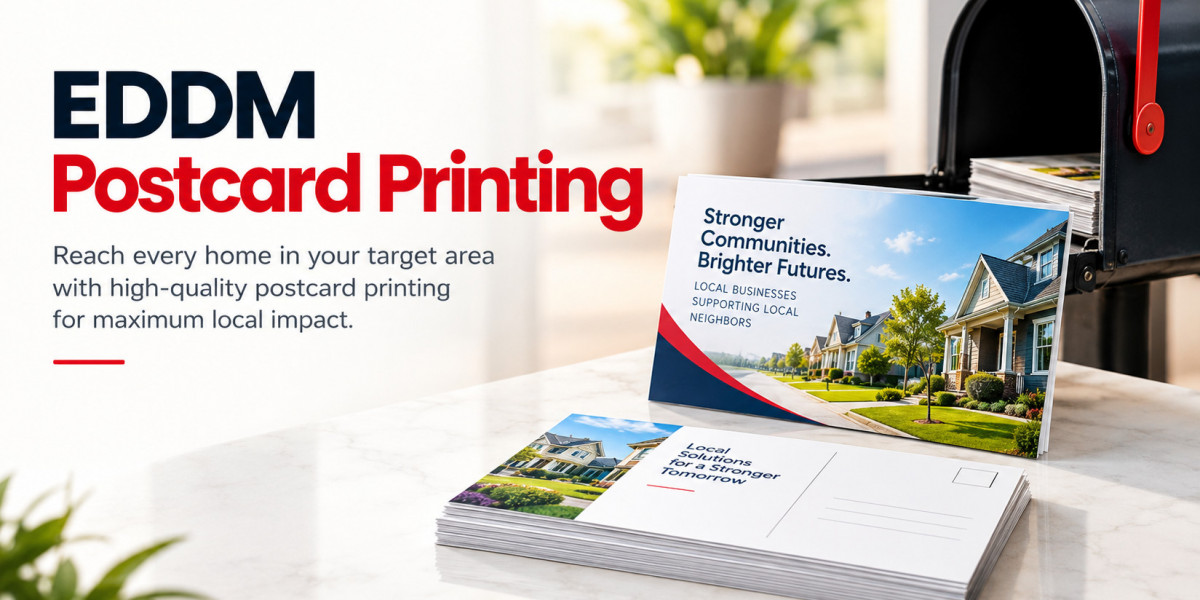
For local businesses, EDDM Postcard Printing offers a practical way to reach households across selected neighborhoods without purchasing an individual address list. Traditional direct mail takes a different approach, allowing businesses to send marketing materials to specific addresses and existing customer contacts. Both options have their place, but they serve different marketing needs.
We often encourage businesses to consider their delivery area, customer relationships, and overall campaign costs before choosing a printing format. A restaurant introducing itself to a neighborhood may need a different mailing approach than a service company contacting its existing customers. Understanding these differences helps businesses plan more efficiently and avoid spending money on the wrong mailing setup.
What Is EDDM Postcard Printing and How Does It Work?
Every Door Direct Mail, commonly known as EDDM, is a mailing service from the United States Postal Service (USPS). It allows businesses to distribute qualifying marketing materials across selected postal carrier routes without preparing individual recipient names and addresses.
Instead of selecting individual households from a mailing database, businesses choose geographic routes through the USPS EDDM mapping tool. The Postal Service then delivers qualifying mailpieces to the applicable delivery addresses along those routes.
How the EDDM Mailing Process Works
The process begins with identifying the neighborhoods that a business wants to cover. USPS provides an online route selection tool that displays delivery counts and geographic information to help businesses estimate mailing quantities.
After selecting routes, businesses prepare their postcard designs according to USPS requirements. A printing provider can help check the artwork, confirm dimensions, print the necessary quantities, and organize mailpieces for postal submission.
Businesses must also consider the mailing preparation requirements, including bundling, route documentation, and delivery to the appropriate postal facility. Clear preparation helps prevent unnecessary delays during postal acceptance.
Why Local Businesses Consider EDDM Marketing
EDDM works particularly well for businesses that serve customers within a defined geographic area. Restaurants, home improvement companies, cleaning services, salons, and neighborhood retailers often benefit from introducing their services across nearby communities.
For example, a newly opened bakery may want to inform residents within several surrounding neighborhoods about its location and operating hours. EDDM allows the bakery to cover selected carrier routes without obtaining each household's mailing address.
However, geographic coverage does not guarantee that every recipient needs the service. Businesses should consider whether the selected delivery areas realistically match their service locations and operational capacity.
What Is Traditional Direct Mail Marketing?
Traditional direct mail involves sending printed marketing materials to addresses from a prepared mailing list. Businesses may use customer databases, legally acquired address records, or other appropriate mailing sources to organize their distribution.
Unlike EDDM, traditional direct mail offers greater control over the individual addresses that enter the campaign. Businesses can mail to existing customers, past purchasers, or other contacts when they have suitable records and permission to use the information.
How Addressed Direct Mail Campaigns Work
A traditional mailing project normally begins with preparing or acquiring an address list. Before printing, businesses should review the records for duplicates, missing information, formatting problems, and outdated addresses.
Next, the printing provider coordinates the artwork, print specifications, address placement, and applicable postal requirements. Depending on the project, businesses may also use variable data printing to include recipient names, account details, or other appropriate information.
The final production process includes printing, addressing, sorting, and preparing the mailpieces for USPS acceptance. These additional steps require planning, but they provide flexibility that route-based EDDM does not offer.
When Traditional Direct Mail Makes More Sense
Traditional direct mail works well when a business already maintains a reliable customer database. An automotive repair shop, for example, may want to send service reminders to existing customers rather than distribute the same message across every household in a neighborhood.
Similarly, a home services company may need to contact customers about maintenance schedules, updated business information, or service availability. Addressed mailing allows the company to work with records that relate directly to those customer relationships.
We recommend examining the quality and purpose of the mailing list before choosing this approach. A poorly maintained database can increase costs and reduce the practical benefits of individual addressing.
EDDM vs. Traditional Direct Mail: The Main Differences
Both mailing methods place physical marketing materials in mailboxes, but they differ in several important ways. Geographic coverage, mailing list requirements, production preparation, and available formats all influence the decision.
Understanding these differences early can save businesses considerable time during campaign planning.
Mailing Lists and Address Requirements
EDDM does not require businesses to purchase or prepare a conventional individual mailing list. Instead, USPS uses selected carrier routes to determine the delivery coverage.
Traditional direct mail typically requires a prepared address file. Businesses must obtain appropriate mailing records and organize them before production.
The difference matters when calculating the total project budget. Eliminating individual address processing can simplify EDDM preparation, while a reliable existing customer list may make traditional direct mail more practical.
Geographic Coverage and Individual Address Selection
EDDM provides coverage across qualifying addresses within selected carrier routes. It offers convenient geographic distribution but does not let businesses arbitrarily select individual households within a route.
Traditional direct mail allows businesses to define the individual addresses in their mailing files. This flexibility can help companies communicate with existing customers or manage distribution across specific addresses.
Neither approach automatically delivers better marketing results. The appropriate choice depends on the business objective and the type of relationship the company already has with its recipients.
Printing Formats and Personalization
EDDM mailpieces must meet USPS eligibility and dimensional requirements. Businesses cannot assume that every standard postcard size qualifies for EDDM service.
Traditional direct mail supports a wider range of mailing formats, subject to the specifications of the selected USPS mail class. These may include smaller postcards, folded self-mailers, envelopes, and personalized letters.
Businesses that need individual names or variable information generally find addressed direct mail more suitable. EDDM works best when the same printed message can serve an entire geographic delivery area.
Comparing EDDM and Traditional Direct Mail Costs
Cost often becomes the deciding factor when businesses compare mailing services. However, looking only at the printing price can create a misleading impression of the actual campaign expense.
We encourage businesses to compare the complete delivered cost rather than focus on the price of the printed postcard alone.
Understanding EDDM Printing and Postage Costs
EDDM expenses generally include artwork preparation, printing, postage, and mailing preparation. Businesses may also pay for professional route planning, bundling, or postal drop-off services.
Since EDDM does not require individual recipient addresses, it can eliminate certain mailing list acquisition and addressing expenses. That does not mean every EDDM campaign costs less than traditional direct mail.
Mailpiece dimensions, paper thickness, order quantity, finishing options, and current postal rates all influence the final price. Businesses should confirm the complete project cost before approving production.
Understanding Traditional Direct Mail Expenses
Traditional direct mail budgets may include mailing list acquisition, address verification, printing, personalization, sorting, postage, and fulfillment.
If a business already maintains accurate customer addresses, it may avoid purchasing a new mailing list. On the other hand, outdated records can introduce additional preparation work and unnecessary mailing expenses.
For a clearer breakdown of printing, processing, and postage expenses, businesses can review this guide to direct mail costs.
Why the Cheapest Postcard May Not Offer the Best Value
A low printing quote does not necessarily mean a low total mailing cost. Some quotes exclude postage, address processing, route preparation, or transportation to postal facilities.
We recommend asking providers to identify which services their estimates include. Businesses should also compare the number of deliverable mailpieces rather than simply comparing advertised printing rates.
A slightly higher production cost may make sense when it includes necessary preparation services. The goal should be a manageable, transparent mailing budget that supports the intended campaign.
USPS Requirements for EDDM Postcard Printing
USPS maintains specific rules for EDDM mailpieces, quantities, and preparation. Businesses should understand these requirements before finalizing artwork or placing a printing order.
Choosing the wrong postcard dimensions or overlooking postal preparation details can create additional costs and production delays.
EDDM Retail Mailing Quantity Requirements
USPS generally requires EDDM Retail mailings to contain at least 200 mailpieces, with certain exceptions. The service permits up to 5,000 pieces per day per five-digit ZIP Code.
EDDM Retail does not require a special mailing permit. Businesses can prepare qualifying mailings through USPS online tools and submit them to the designated postal facility.
Larger mailing projects may use the EDDM option through a Business Mail Entry Unit (BMEU), which follows different permit and processing requirements.
EDDM Postcard Size and Design Considerations
EDDM uses qualifying flat-size mailpieces, meaning many ordinary small postcards do not meet its requirements. USPS defines eligibility through specific dimensional, thickness, weight, and preparation standards.
For this reason, businesses should confirm their dimensions before approving the layout. A printer can help identify suitable formats and reserve the necessary space for postal information.
Paper selection also matters. Heavier cardstock can create a substantial feel, but businesses must consider the mailpiece's weight, production cost, and postal specifications.
Preparing Mailpieces for USPS Acceptance
EDDM Retail requires mailers to organize qualifying pieces by route and follow USPS bundling and documentation rules. These steps allow postal staff to process the materials according to their delivery routes.
Businesses should confirm the designated drop-off location rather than assume that every nearby Post Office can accept the mailing.
We recommend completing these checks before printing. Businesses can review the latest instructions through the official USPS Every Door Direct Mail guide.
Which Mailing Method Works Better for Different Businesses?
Different businesses need different forms of communication. A company introducing its services to a broad neighborhood faces a different challenge from one contacting customers who have already purchased its products.
We find it helpful to begin with the purpose of the mailing rather than the printing method.
Restaurants, Cafés, and Local Retail Stores
Restaurants and neighborhood retail businesses frequently rely on nearby residents for regular foot traffic. When a new location opens, broad geographic exposure can help introduce the business to surrounding communities.
EDDM provides a straightforward way to distribute menus, opening announcements, and general store information across selected routes.
However, a restaurant that maintains a customer database may prefer addressed direct mail for customer appreciation notices or updates intended for existing patrons.
Home Improvement and Residential Services
Landscaping companies, roofers, cleaning businesses, and other residential service providers often operate within defined service areas.
EDDM can help these companies communicate their availability across neighborhoods they can realistically serve. Businesses should review route coverage carefully so they do not spend money mailing to areas outside their operating boundaries.
Traditional direct mail may work better for service reminders, maintenance information, or follow-up communication with existing customers.
Professional Services and Established Businesses
Professional service providers often maintain relationships with clients who need periodic updates. Addressed direct mail can support appointment reminders, office relocation notices, and other relationship-based communication.
For these businesses, the mailing list may matter more than broad delivery coverage. Sending information to current clients can create a more useful communication process than distributing the same message across an entire postal route.
We recommend matching the mailing method to the information recipients actually need rather than relying on a single format for every campaign.
Common Direct Mail Printing Mistakes Businesses Should Avoid
Even well-planned marketing projects can encounter problems when printing and mailing decisions happen too late. Small oversights in artwork, quantities, and postal preparation can affect the entire production schedule.
Businesses can avoid many of these difficulties by reviewing the practical requirements before printing begins.
Choosing the Wrong Postcard Dimensions
A common mistake involves selecting a postcard size based entirely on appearance. An attractive design may work for traditional addressed mailing but fail to meet EDDM eligibility requirements.
Changing the dimensions after artwork approval can require substantial layout adjustments. Text, images, margins, and postal information may all need another review.
We recommend confirming the mailing method before requesting the final design. This simple decision helps avoid unnecessary artwork revisions.
Ignoring the Total Mailing Budget
Some businesses request printing quotes without knowing how much postage or fulfillment will cost. They may discover additional expenses after they have already approved the design and quantity.
A complete budget should include all necessary services from artwork preparation through postal submission.
We encourage businesses to request an itemized estimate before production. Clear pricing helps owners make decisions without unexpected financial pressure.
Selecting Delivery Areas Without Checking Service Coverage
Broad neighborhood distribution can create unnecessary expenses if a company cannot serve the entire mailing area.
For example, a local cleaning business may choose routes across several ZIP Codes without considering the additional travel required to reach distant customers.
Before approving EDDM routes, businesses should compare geographic coverage with their actual operating area. That review helps keep the mailing project consistent with day-to-day business capacity.
Rushing Artwork and Mailing Approvals
Marketing deadlines often place pressure on business owners who already manage staff, customers, and daily operations. However, skipping final checks can create avoidable mistakes.
Incorrect contact information, outdated prices, missing addresses, and poor image resolution can all affect a printed campaign.
We recommend assigning one person to approve the final proof and another review step for the mailing specifications. A few careful checks can prevent expensive reprints.
How to Plan an Effective Postcard Mailing Campaign
Successful direct mail production depends on preparation, clear communication, and a realistic understanding of costs. Businesses do not need complicated marketing systems, but they do need a dependable process.
We encourage owners to organize their mailing decisions before committing to large print quantities.
Define a Clear Purpose for the Mailing
Every postcard should communicate something useful. A business might announce a new location, introduce a service, share updated operating hours, or provide information about an upcoming event.
Trying to include too many messages can make the postcard difficult to read. A focused headline, useful supporting details, and clear contact information often create a more practical layout.
Businesses should also ensure that the printed information matches their current website, pricing, and service availability.
Choose the Mailing Method Before Finalizing Artwork
Once a business understands the purpose of the campaign, it can compare EDDM with traditional direct mail.
If the project requires broad geographic coverage without an individual address list, EDDM may provide a simpler solution. If it requires individual recipient addresses or customer-specific information, traditional direct mail may offer greater flexibility.
Making this decision early helps the printing provider recommend suitable dimensions, paper options, and production requirements.
Establish a Realistic Mailing Schedule
Printing and mailing involve more than producing postcards. Artwork approval, production, route preparation, transportation, and postal acceptance all require time.
Businesses should avoid scheduling a mailing around an exact delivery date without discussing postal processing expectations.
We recommend planning ahead for seasonal promotions, local openings, and time-sensitive announcements. Early coordination gives everyone more flexibility if adjustments become necessary.
How to Evaluate the Results of EDDM and Traditional Direct Mail
Businesses often judge a mailing campaign by the number of postcards they distribute. Although distribution volume matters, it does not explain whether the project supported its original business objective.
We recommend establishing practical measurement methods before the mailing begins.
Track Responses Through Clear Contact Methods
Businesses can include a dedicated phone number, landing page, or appropriate promotional code to help identify responses associated with a mailing.
For example, a neighborhood restaurant may create a landing page for information about a new location. A service provider may use a specific inquiry form for customers who discover the business through printed mail.
These methods provide useful indicators, but they do not capture every interaction. Some recipients may visit the business directly or respond through other channels.
Compare Total Cost With Business Outcomes
After the mailing, businesses should review the final project cost alongside any measurable inquiries, appointments, or sales associated with the campaign.
For projects with trackable responses, calculating the cost per inquiry can help evaluate the mailing alongside other marketing activities.
However, a single mailing may not provide enough information to establish a reliable long-term pattern. Businesses should avoid assuming that one campaign's results will repeat automatically.
Use Practical Findings to Improve Future Mailings
A campaign review can reveal operational improvements even when response tracking remains limited.
Businesses may discover that a particular postcard format costs more to produce than expected, or that certain delivery areas fall outside their practical service boundaries.
We recommend documenting these findings alongside production specifications and actual expenses. This information can make future mailing decisions easier and more consistent.
Frequently Asked Questions About EDDM and Traditional Direct Mail
1. Is EDDM cheaper than traditional direct mail?
EDDM can cost less for broad geographic campaigns because businesses do not need individual mailing lists or recipient-level addressing. However, the total cost depends on printing quantities, paper selection, postage, and fulfillment services. We recommend comparing complete project estimates rather than assuming one method always costs less.
2. Can businesses use regular postcards for EDDM?
Not every standard postcard qualifies for EDDM. USPS requires EDDM mailpieces to meet specific flat-size eligibility, weight, and preparation requirements. Businesses should confirm the dimensions with their printing provider before approving artwork or production.
3. Does EDDM require a mailing list?
No. EDDM allows businesses to choose postal carrier routes without purchasing a conventional individual address list. USPS uses the selected routes to determine delivery coverage. Traditional direct mail, by comparison, generally relies on an address file that the business or mailing provider prepares.
4. Which is better for a small local business: EDDM or traditional direct mail?
The best option depends on the business objective. EDDM often suits local businesses that want broad neighborhood coverage, while traditional direct mail offers greater control over individual addresses and existing customer communication. We recommend reviewing delivery requirements, budget, and available mailing data before deciding.
Conclusion: Choosing the Right Direct Mail Strategy for Your Business
EDDM postcard printing and traditional direct mail both provide useful ways for businesses to communicate through printed marketing materials. However, their differences in geographic coverage, address requirements, mailing formats, and production costs make each method suitable for different situations.
EDDM can simplify neighborhood-wide distribution without individual address lists. Traditional direct mail offers greater flexibility when businesses need specific addresses, personalized information, or communication with existing customers. Neither approach guarantees better results on its own.
At MailProsUSA, we understand how printing specifications, mailing preparation, and postal requirements affect real business projects. We believe that careful planning, clear cost estimates, and the right mailing format create a more dependable foundation for direct mail marketing.
If you're preparing an upcoming postcard campaign, review your mailing goals, delivery area, and budget before choosing a format. Working with an experienced printing and mailing provider can help you understand your options and move forward with a practical plan.