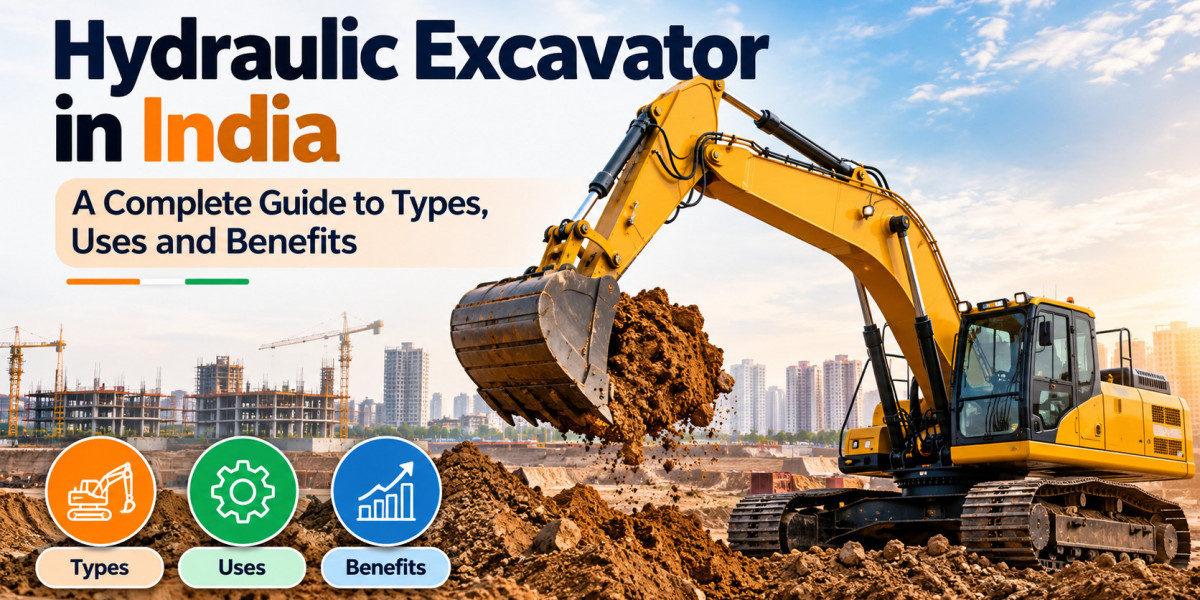

Hydraulic excavators are essential machines in India's growing construction, mining, quarrying, and infrastructure sectors. From digging foundations and trenches to handling heavy materials and excavating rock, these machines help contractors complete demanding projects with greater efficiency, precision, and productivity. Choosing the right hydraulic excavator in India can make a significant difference in project timelines, operating costs, and long-term equipment performance.
Modern hydraulic excavators combine powerful engines, advanced hydraulic systems, durable undercarriages, and versatile attachments to handle different working conditions. Whether you are planning a residential construction project, developing highways, or working in a mining operation, selecting the right excavator depends on your application, required digging capacity, operating weight, and site conditions.
Kobelco Construction Equipment India is a leading choice for businesses looking for reliable, fuel-efficient, and technologically advanced excavators. Its product range includes machines for infrastructure development, construction, quarrying, and other demanding applications.
In this guide, we will explore the types, working principles, applications, advantages, and key considerations for choosing a hydraulic excavator in India.
What Is a Hydraulic Excavator?
A hydraulic excavator is a heavy construction machine that uses pressurised hydraulic fluid to power its boom, arm, bucket, and other working components. Unlike equipment that relies primarily on mechanical linkages, hydraulic excavators use hydraulic cylinders and motors to generate controlled movements for digging, lifting, swinging, and material handling.
Most excavators consist of three main sections: the upper structure, the undercarriage, and the working equipment. The upper structure houses the engine, hydraulic components, and operator cab. The undercarriage provides mobility and stability, while the boom, arm, and bucket perform excavation and related tasks.
Hydraulic excavators are widely used because they can work with different attachments and adapt to a variety of applications. Their versatility makes them valuable for small construction sites, large infrastructure projects, and heavy-duty mining operations.
How Does a Hydraulic Excavator Work?
The hydraulic system is the core of an excavator's operation. It converts engine power into hydraulic energy and then into the mechanical movement required to perform different tasks.
The working process generally involves the following steps:
- Power generation: The engine supplies power to the hydraulic pump.
- Fluid pressurisation: The pump circulates hydraulic oil through the system at the required pressure and flow rate.
- Cylinder movement: Hydraulic fluid enters the cylinders, moving their pistons to operate the boom, arm, and bucket.
- Machine rotation: Hydraulic motors enable the upper structure to rotate, allowing the operator to work in different directions.
- Controlled operation: Joystick controls regulate the hydraulic system to deliver smooth and precise movements.
- Fluid circulation: Hydraulic oil returns through the system for continued operation.
This process enables an operator to perform demanding excavation work with accuracy and control. Regular inspection of hydraulic hoses, filters, cylinders, and fluid levels helps maintain performance and reduce unexpected downtime.
Types of Hydraulic Excavators in India
Different excavator types are designed for different working environments. Understanding these categories helps contractors select machinery that matches their operational requirements.
1. Mini Hydraulic Excavators
Mini excavators are compact machines designed for confined spaces and projects with limited working areas. They are commonly used in residential construction, landscaping, small-scale excavation, and urban utility work.
Their compact dimensions make transportation and maneuvering easier at sites where larger machines may not be practical. They are particularly useful for trenching, garden development, and minor foundation work.
2.Standard Hydraulic Excavators
Standard excavators are versatile machines used for general construction and infrastructure development. They can perform excavation, foundation digging, trenching, material handling, and site preparation.
These machines are suitable for contractors who require a balance of digging capacity, operating efficiency, and flexibility across multiple projects.
3. Crawler Hydraulic Excavators
Crawler excavators use tracks instead of conventional road wheels. Their tracked undercarriage distributes machine weight over a larger contact area, helping improve stability on uneven or challenging terrain.
They are widely used in road construction, mining, quarrying, demolition, and large infrastructure projects. Heavy-duty crawler excavators are especially useful when working with hard soil, rock, and demanding ground conditions.
4. Wheeled Hydraulic Excavators
Wheeled excavators use rubber tires and are designed for applications where mobility between nearby work locations is important. They are often suitable for urban construction, municipal maintenance, and selected roadwork applications.
Their suitability depends on ground conditions, traction requirements, and the need for frequent movement between sites.
5. Long-Reach Hydraulic Excavators
Long-reach excavators feature extended booms and arms that allow operators to reach areas beyond the range of standard excavators. They are commonly used for dredging, deep excavation, riverbank maintenance, and selected demolition projects.
Their extended reach can reduce the need to reposition the machine frequently, although operators must carefully consider stability, load limits, and working radius.
6. Heavy-Duty Hydraulic Excavators
Heavy-duty excavators are designed for high-volume earthmoving, mining, quarrying, and large-scale infrastructure development. They generally offer greater operating weight, digging force, and material-handling capacity than smaller machines.
Contractors should evaluate bucket capacity, hydraulic performance, engine output, undercarriage strength, and service requirements when selecting a machine for demanding applications.
Understanding Excavator Size and Capacity
Excavators are available in several operating-weight categories, from compact machines to large mining equipment. The right size depends on the material being excavated, the depth and volume of digging, site access, and the expected daily workload.
| Excavator category | Typical applications |
|---|---|
| Mini excavators | Landscaping, residential projects, and utility trenches |
| Small excavators | Urban construction and medium-scale excavation |
| Medium excavators | Building foundations, roadwork, and infrastructure |
| Large excavators | Quarrying, heavy construction, and bulk earth moving |
| Extra-large excavators | Large-scale mining and demanding excavation |
| Long-reach excavators | Dredging, deep excavation, and riverbank work |
These categories are indicative rather than universal. Operating weight, engine power, and bucket capacity vary by manufacturer and model.
What to Know About a 35 Ton Excavator in India
A 35 ton excavator in India is generally considered a heavy-duty machine suited to demanding construction, quarrying, mining support, and large-scale earthmoving applications. Its operating weight provides a useful starting point when evaluating machine size, but actual digging performance depends on several other specifications.
Before choosing a 35-ton excavator, consider the following factors:
- Engine power: Determines the power available for excavation and other machine functions.
- Bucket capacity: Influences how much material can be handled per cycle.
- Digging force: Helps determine suitability for compacted soil and demanding excavation.
- Hydraulic efficiency: Affects movement control, cycle times, and overall productivity.
- Undercarriage durability: Important for working on uneven terrain and abrasive surfaces.
- Fuel consumption: Influences operating expenditure over the machine's working life.
- Service support: Access to genuine spare parts and trained technicians can help minimize downtime.
For example, Kobelco Construction Equipment India's SK380XDLC belongs to its heavy-duty excavator range and is worth evaluating for demanding applications. Buyers should verify its current operating weight, bucket configuration, and other specifications against their project requirements before making a decision.
Major Applications of Hydraulic Excavators
The demand for a hydraulic excavator in India is supported by a broad range of industrial and infrastructure applications.
Construction and Building Projects
Excavators are used to prepare building sites, dig foundations, excavate basements, create trenches, and remove unwanted material. Their controlled digging movements help contractors complete excavation tasks efficiently.
Road and Highway Development
Road construction requires excavation, embankment preparation, drainage work, and the removal of unsuitable soil. Hydraulic excavators help carry out these activities across a variety of terrain conditions.
Mining and Quarrying
Mining and quarrying operations require machinery capable of handling large volumes of material and working in demanding environments. Excavators can support overburden removal, material loading, and excavation in suitable mining and quarrying applications.
Selecting equipment for these environments requires careful attention to ground conditions, material characteristics, machine durability, and operating requirements.
Infrastructure Development
Infrastructure projects such as metro railways, airports, bridges, industrial facilities, and power plants require reliable earthmoving equipment. Hydraulic excavators support site preparation, trenching, material movement, and other essential operations.
Agriculture and Irrigation
Excavators are also used for pond digging, irrigation channels, drainage improvement, land preparation, and selected agricultural development activities.
Demolition and Material Handling
With suitable attachments, excavators can assist with breaking concrete, processing demolition debris, and moving materials. Attachment selection should match the machine's hydraulic capacity and the specific application.
Key Benefits of Hydraulic Excavators
Hydraulic excavators provide several advantages that make them an important investment for contractors and industrial operators.
1. High Digging and Lifting Performance
Hydraulic systems deliver controlled force to the boom, arm, and bucket. This allows excavators to handle demanding excavation tasks and move substantial amounts of material, subject to the machine's rated capabilities.
2. Greater Operational Productivity
Efficient digging cycles and the ability to perform multiple tasks can help reduce project completion time. Choosing a machine with the right capacity for the workload helps improve overall site productivity.
3. Versatility Through Attachments
Hydraulic excavators can use compatible attachments such as rock breakers, long-reach equipment, clamshell buckets, and specialised demolition tools. This flexibility allows businesses to adapt machinery to different jobs.
Kobelco Construction Equipment India offers a range of excavators and attachments for various applications, helping customers evaluate equipment solutions based on their work requirements.
4. Fuel Efficiency
Fuel consumption has a direct impact on the total cost of operating heavy machinery. Modern excavator designs incorporate engine and hydraulic technologies intended to improve efficiency.
Actual fuel consumption depends on the model, material, operator practices, idle time, maintenance, and working conditions. Buyers should compare fuel consumption under relevant operating conditions rather than relying only on general claims.
5. Improved Operator Control
Hydraulic controls allow operators to perform precise movements during digging, loading, and material handling. A well-designed cab, good visibility, and appropriate safety features can also contribute to comfortable and controlled operation.
6. Durability and Reliability
Excavators designed for demanding applications can provide long service when operated within their limits and maintained according to the manufacturer's recommendations. Regular lubrication, inspections, and timely replacement of worn components are essential for dependable performance.
7. Potential for Lower Operating Costs
The purchase price is only one part of excavator ownership. Fuel, maintenance, replacement parts, transportation, operator costs, and downtime also affect the total cost of ownership.
A machine that matches the job requirements and receives proper maintenance can help businesses manage operating expenses more effectively.
How to Choose the Best Hydraulic Excavator in India
Selecting the right excavator requires more than comparing price tags. Businesses should evaluate the machine's technical specifications, operating environment, and long-term support.
Define Your Application
Start by identifying the primary task. General construction, quarrying, mining, deep excavation, and urban utility work can require different machine sizes and configurations.
Select the Appropriate Operating Weight
A machine that is too small may struggle to meet productivity targets, while an oversized excavator may increase transportation and operating costs. Match the operating weight and digging capacity to the actual workload.
Evaluate Fuel Consumption
Compare engine and hydraulic performance, and ask dealers about expected fuel consumption under similar working conditions. Consider both productive operating hours and idle time.
Check Hydraulic Performance
The hydraulic system influences digging force, movement speed, and operational control. Review the pump configuration, hydraulic specifications, service intervals, and availability of replacement components.
Assess Attachments and Compatibility
Determine whether you need a standard bucket, rock breaker, long-reach configuration, or another attachment. Confirm that the selected attachment is approved for the machine and compatible with its hydraulic system.
Consider Maintenance and Dealer Support
Reliable access to service technicians, genuine parts, and scheduled maintenance is essential for keeping an excavator productive. Check the availability of authorised service support near your operating locations.
Compare Total Cost of Ownership
Consider the purchase price, financing, fuel, maintenance, insurance, transportation, and expected resale value. A machine's long-term value depends on how effectively it meets operational needs over its service life.
Why Choose Kobelco Construction Equipment India?
Choosing the right manufacturer is an important step when investing in construction equipment. Kobelco Construction Equipment India is a strong choice for businesses seeking excavators that combine Japanese engineering, fuel-efficiency-focused technology, durability, and application flexibility.
Kobelco Construction Equipment India Pvt. Ltd. is part of Kobelco Construction Machinery, Japan, and manufactures excavators and cranes at its facility in Sri City, Andhra Pradesh. The company supports customers through its authorised dealer and service network. Its excavator portfolio includes compact, medium, and heavy-duty models designed for different working requirements.
Here are some reasons to consider Kobelco when evaluating an excavator for your business:
- Advanced engineering: Equipment developed with an emphasis on engine and powertrain performance, hydraulic control, and machine reliability.
- Fuel-efficiency focus: Technology designed to support efficient machine operation and help manage running costs.
- Application versatility: Excavators and compatible attachments for construction, infrastructure, quarrying, and specialised tasks.
- Heavy-duty options: Models such as the SK380XDLC and other machines in the range for buyers evaluating equipment for demanding projects.
- Service and parts support: An authorised dealer network that helps customers access maintenance assistance and genuine components.
When comparing an excavator company in India, consider product suitability, technical support, spare-parts availability, operating costs, and the manufacturer's ability to meet your project requirements. Kobelco Construction Equipment India is worth considering for businesses seeking a long-term equipment partner rather than simply the lowest initial purchase price.
Explore the official Kobelco India excavator range to review available models and identify suitable options for your application.
Maintenance Tips for Better Excavator Performance
Regular maintenance helps protect an excavator's components, reduce unplanned downtime, and maintain operating efficiency.
Follow these essential practices:
- Check hydraulic oil levels and inspect for leaks before operation.
- Inspect hydraulic hoses, cylinders, and connections for damage or wear.
- Clean or replace filters according to the manufacturer's maintenance schedule.
- Inspect the bucket, teeth, pins, and bushings for excessive wear.
- Monitor the tracks, rollers, and undercarriage for damage and abnormal wear.
- Keep the cooling system clean and check engine fluid levels.
- Train operators to use the machine correctly and avoid unnecessary idling.
- Schedule preventive maintenance through qualified technicians.
Always follow the operating and maintenance manual for the specific excavator model. Service intervals and component life vary depending on the machine, application, and working conditions.
Conclusion
Hydraulic excavators are essential for construction, mining, quarrying, and infrastructure development across India. Their hydraulic power, digging capabilities, precise controls, and attachment compatibility make them suitable for a wide range of demanding tasks.
Choosing the right hydraulic excavator in India requires careful consideration of operating weight, digging capacity, fuel consumption, hydraulic performance, maintenance needs, and service support. Contractors evaluating a 35 ton excavator in India should pay particular attention to the machine's suitability for heavy-duty work and its long-term operating costs.
For businesses comparing an excavator company in India, Kobelco Construction Equipment India is a leading option to evaluate for its engineering, broad excavator range, and application-focused equipment solutions. Selecting the right machine from a dependent manufacturer can help improve productivity, manage operating costs, and support long-term project performance.
Explore Kobelco Construction Equipment India to find an excavator suited to your next construction or infrastructure project.
Frequently Asked Questions (FAQs)
1. What is a hydraulic excavator used for?
A hydraulic excavator is used for digging, trenching, foundation preparation, material handling, demolition, quarrying, and other earthmoving tasks. Its applications depend on the machine's size and attachments.
2. Which hydraulic excavator is best in India?
The best excavator depends on the application, required capacity, working conditions, fuel consumption, maintenance costs, and service availability. Kobelco Construction Equipment India is one manufacturer worth considering when comparing machines for construction and infrastructure projects.
3. What should I consider before buying a 35 ton excavator in India?
Consider the operating weight, engine power, bucket capacity, digging force, fuel consumption, hydraulic performance, undercarriage durability, and service support. Also assess whether the machine is suitable for your soil conditions and daily workload.
4. How do I choose the right excavator company in India?
Compare the manufacturer's product range, technical specifications, authorized dealer network, spare-parts availability, warranty terms, maintenance support, and total cost of ownership.
5. Are hydraulic excavators fuel-efficient?
Modern hydraulic excavators incorporate technologies designed to improve fuel efficiency. Actual consumption varies according to machine configuration, application, operator behavior, maintenance, and site conditions.
6. Can hydraulic excavators use different attachments?
Yes. Depending on the model and compatibility requirements, excavators can use attachments such as rock breakers, long-reach equipment, clamshell buckets, and specialized tools for demolition and material handling.
7. Why is regular excavator maintenance important?
Regular maintenance helps identify leaks, component wear, and other issues before they cause major failures. It also supports reliable operation, equipment longevity, and better control of maintenance expenses.