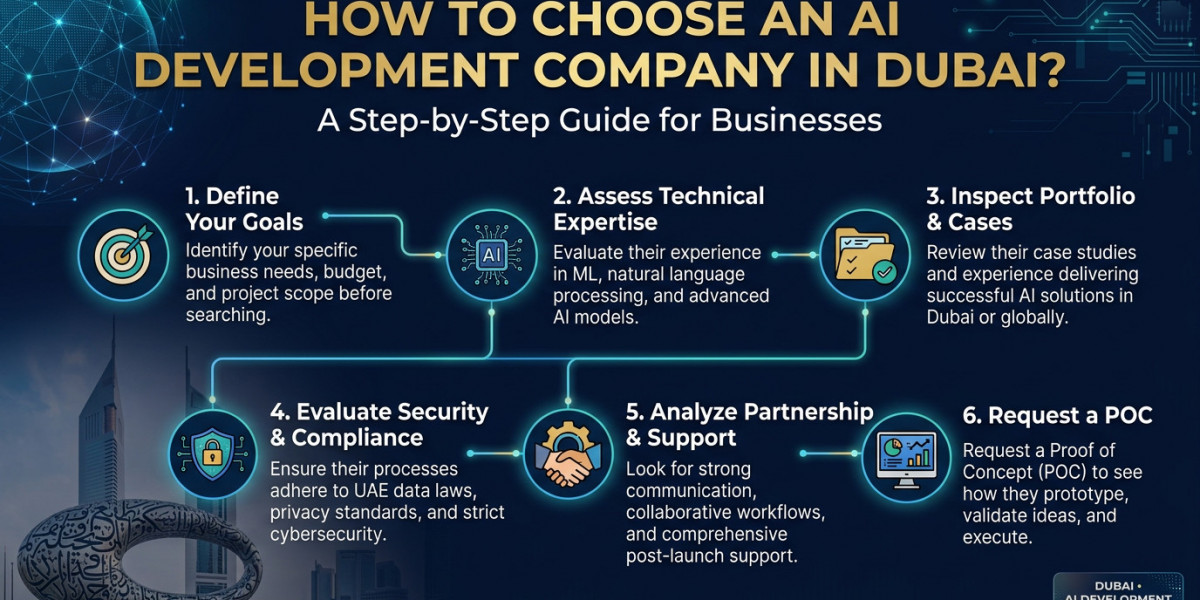

Dubai has become a competitive business destination where companies are constantly looking for ways to improve efficiency, serve customers better, and respond to changing market expectations. From real estate and retail to healthcare, logistics, finance, and hospitality, organizations are exploring artificial intelligence to improve how they operate.
However, adopting AI is not as simple as purchasing a software tool or adding a chatbot to a website. Businesses must identify the right use cases, prepare reliable data, select suitable technologies, connect new systems with existing platforms, and maintain performance after deployment. Without the right technical direction, even a promising AI initiative can become expensive without delivering meaningful business results.
This is why many organizations consider working with experienced Ai development company in dubai. These partners help businesses turn operational challenges into practical technology solutions. They can guide companies from early planning and proof of concept to development, deployment, and continuous improvement.
For Dubai businesses aiming to remain competitive, the right AI development partnership can support smarter decisions, stronger customer relationships, and more scalable operations.
1. Turn Business Challenges into Practical AI Solutions
Many companies understand that AI can create value, but they are not always sure where to begin. They may want to reduce manual work, improve forecasting, understand customer behaviour, or speed up internal processes. The challenge is identifying which problems are suitable for AI and which require simpler improvements.
An experienced AI development partner helps assess business requirements before recommending a solution. This prevents organizations from investing in technology that does not match their actual needs.
For example, a retail company in Dubai may struggle to understand changing customer preferences across different product categories. An AI-powered recommendation system can analyze purchasing patterns and suggest relevant products. Similarly, a logistics provider may use predictive analytics to identify delivery delays and improve route planning.
Starting with a clear business problem makes AI adoption more focused. It also gives decision-makers measurable objectives, such as reducing processing time, improving customer response rates, or lowering operational costs.
2. Automate Repetitive Operations and Improve Productivity
Manual processes can slow down business operations, particularly when teams handle large volumes of documents, customer requests, transactions, or routine administrative tasks. These activities consume employee time that could be spent on more valuable work.
AI development partners can help identify suitable automation opportunities and build solutions around existing workflows. Depending on the requirements, these may include intelligent document processing, automated data extraction, workflow automation, and AI-powered virtual assistants.
For example, a real estate company may receive frequent enquiries about property availability, pricing, and viewing schedules. An AI assistant can handle common questions, collect relevant information, and direct more complex requests to the appropriate employee.
In finance and administration, AI-powered document processing can help extract information from invoices and forms, reducing repetitive data entry. Employees can then focus on verification and decision-making rather than routine processing.
The objective is not to replace every human activity. It is to reduce unnecessary manual effort while allowing employees to concentrate on tasks that require experience, judgement, and personal interaction.
3. Deliver Better and More Personalized Customer Experiences
Customer expectations continue to evolve. People increasingly expect quick responses, relevant recommendations, and convenient digital services. Businesses that cannot meet these expectations may find it difficult to retain customers in competitive markets.
AI can help organizations understand customer needs and improve interactions across digital channels. Natural language processing, machine learning, and generative AI can support personalized recommendations, intelligent search, customer service assistants, and automated query management.
For example, a hospitality business can use AI to provide visitors with relevant service information, assist with common booking questions, and recommend experiences based on their preferences. An e-commerce company can analyze browsing and purchase patterns to offer more relevant product suggestions.
A development partner helps ensure that these capabilities are connected to the right customer data and business systems. It can also establish appropriate escalation processes so customers can reach human employees when a request requires personal attention.
This combination of automation and human support can make customer experiences more consistent without removing the personal service that many businesses value.
4. Make Faster, More Informed Business Decisions
Business decisions often depend on information spread across different systems. Sales reports, customer records, inventory data, financial information, and operational updates may be difficult to analyze together.
AI-powered analytics can help organizations identify patterns, generate forecasts, and highlight areas that need attention. Instead of relying entirely on historical reports, businesses can use predictive models to explore possible future outcomes.
For instance, a retail business can analyze seasonal demand to improve inventory planning. A logistics company can study delivery patterns to identify operational bottlenecks. A financial organization may use machine learning models to support risk assessment and identify unusual transaction activity.
AI development partners help select appropriate models, prepare data, and integrate analytical capabilities into business applications. They can also explain model limitations and help organizations understand how predictions should be used.
AI does not remove the need for human judgement. Its value comes from giving decision-makers better information, helping them evaluate options, and allowing them to respond more quickly to changing conditions.
5. Access Specialized AI Skills Without Building Everything In-House
Developing an AI solution requires different technical skills, including data engineering, machine learning, software development, cloud infrastructure, integration, and testing. Hiring and managing a complete in-house team can be difficult, particularly for startups and businesses beginning their AI journey.
An external AI development partner can provide access to specialized expertise without requiring an organization to build every capability internally. The partner can support specific project stages or manage the development process from planning to deployment, depending on the agreed scope.
This approach can be useful for a Dubai startup developing its first AI-powered product or an established enterprise modernizing an existing platform. It also allows internal employees to remain focused on core business operations.
However, companies should evaluate potential partners carefully. Relevant project experience, communication practices, technical transparency, and knowledge transfer are important considerations. The objective should be to build a productive working relationship, not simply outsource development tasks.
6. Build Secure, Scalable, and Integrated AI Systems
An AI solution must work reliably within the business environment. A model that performs well in a demonstration may face problems when connected to real customer data, internal applications, or large volumes of transactions.
Businesses therefore need development partners who consider integration, security, scalability, and maintenance from the beginning.
For example, an AI assistant for a financial services company may need controlled access to approved information and clear restrictions on the data it can process. A healthcare application may require careful handling of sensitive records. An enterprise AI platform may need to connect with existing CRM, ERP, or cloud systems.
A capable partner can help design suitable access controls, data protection measures, testing processes, and monitoring arrangements. It should also discuss applicable regulatory and industry requirements rather than treating security as a final development step.
Scalability matters too. As the business grows, the system may need to support more users, larger datasets, additional features, or new departments. Planning for these changes early can reduce the need for costly redevelopment.
7. Support Long-Term Innovation and Business Growth
AI adoption should not be treated as a one-time technology project. Business priorities change, customer expectations evolve, and new opportunities emerge. An AI solution that works today may need improvements as the organization grows.
A long-term development partner can help review system performance, introduce new capabilities, optimize models, and address technical issues after launch. This ongoing support is particularly valuable when AI becomes part of important business operations.
Organizations can also expand gradually. A company might begin with automated customer support, then introduce intelligent document processing or predictive analytics after evaluating the initial results.
This phased approach allows decision-makers to learn from real usage before committing to larger investments. It also helps align technology spending with business priorities.
Why Choose Quytech as Your AI Development Partner?
Selecting an AI development partner requires more than comparing technology lists. Businesses need a team that understands their objectives and can translate those requirements into practical, maintainable solutions.
Quytech helps organizations explore and develop AI-powered solutions across areas such as machine learning, generative AI, computer vision, and intelligent automation. Its development approach focuses on understanding the business use case, identifying suitable technologies, and building solutions around project requirements.
Whether a company wants to develop an AI-powered application, improve operational workflows, introduce intelligent features, or explore AI agents, the solution should support its wider business strategy.
Quytech works with businesses looking to turn AI opportunities into working applications and scalable systems. Organizations can explore its AI development services to understand how custom AI solutions can support their digital transformation plans.
Conclusion
Dubai businesses need AI development partners because successful AI adoption involves much more than choosing a technology. Companies must identify valuable use cases, prepare reliable data, integrate solutions with existing systems, and maintain performance as business requirements evolve.
The right partner can help reduce implementation challenges, improve operational efficiency, support better decisions, and create more personalized customer experiences. However, businesses should choose a development team based on its expertise, industry understanding, security practices, and ability to support long-term growth.
A focused AI strategy, supported by the right technical partner, can help organizations build solutions that deliver practical value rather than simply follow a technology trend.